


| Received | : | Sep 10, 2026 |
| Accepted | : | Sep 29, 2026 |
| Published Online | : | Online: Oct 06, 2026 |
| Journal | : | Journal of Gynecology Case Reports |
| Publisher | : | MedDocs Publishers LLC |
| Online edition | : | http://meddocsonline.org |
Cite this article: Jafarova U, Guliyeva KA, Majumdar P. A Translational Therapeutic Framework Combining Mesenchymal Stem Cell Therapy And Targeted Immunomodulation For Disease Modification In Endometriosis. J Gynecol Case Rep. 2026; 5(2): 1028.
Background: Endometriosis is a chronic inflammatory and fibrotic disorder characterized by ectopic endometrial tissue survival, immune dysfunction, neurogenic inflammation, and persistent pain. Current therapies rely heavily on hormonal suppression or surgical excision, both of which have high recurrence rates and notable side effects.
Objective: We propose a novel translational study design that combines Mesenchymal Stem/Stromal Cell (MSC) therapy with targeted immunomodulation to address the immune, fibrotic, and neuro-inflammatory aspects of endometriosis.
Methods: This preclinical framework integrates three complementary models: (i) ex vivo human endometriosis microenvironment models, (ii) immunocompetent rodent endometriosis models, and (iii) GLP-compliant safety and toxicology studies. The strategy combines allogeneic umbilical cord–derived MSCs or MSC-derived exosomes with selective cytokine pathway inhibition (IL-33 or IL-6). Primary outcomes include immune phenotype reprogramming, reduction in inflammatory and neurogenic mediators, suppression of fibrosis and angiogenesis, and lesion regression.
Expected outcomes: We hypothesize that the combined therapy will outperform monotherapies by restoring immune surveillance, reducing fibrosis, and attenuating neurogenic inflammation.
Conclusion: This study design provides a comprehensive roadmap for developing non-hormonal, fertility-preserving therapies for endometriosis and lays the groundwork for first-in-human trials.
Keywords: Endometriosis; Mesenchymal stem cells; Immunomodulation; IL-33; Fibrosis; Neurogenic inflammation; Translational research.
Endometriosis affects 10–15% of women of reproductive age, causing chronic pelvic pain, infertility, and diminished quality of life [1,2]. Traditionally considered an estrogen-dependent disorder, it is increasingly recognized as a chronic immune-mediated inflammatory disease with prominent neurogenic and fibrotic features [3,4].
Current treatments, including surgical excision and hormonal suppression, provide only temporary relief. Recurrence remains high, and no therapy effectively targets the underlying disease mechanisms [5,6]. Immune dysfunction—manifested as impaired Natural Killer (NK) cell activity, macrophage M1 polarization, and elevated pro-inflammatory cytokines—plays a central role in lesion persistence. This evidence suggests that combining regenerative therapy with immune modulation may offer a transformative approach [7].
This manuscript presents a novel translational study design integrating MSC therapy with targeted immunomodulation to overcome these limitations.
Scientific rationale
Immune dysregulation in endometriosis (Figure 1)
Endometriotic lesions persist due to:
• Elevated pro-inflammatory cytokines (IL-6, IL-8, TNF-α, IL-33)
• Impaired cytotoxic immune clearance
• Dominance of pro-inflammatory (M1) macrophages
• Aberrant angiogenesis and nerve growth
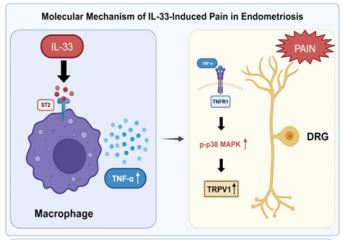
Figure 1: Immune dysregulation and neuro inflammatory microenvironment driving endometriosis lesion persistence.
Therapeutic potential of MSCs
MSCs offer immunomodulatory, anti-fibrotic, and regenerative effects, largely through paracrine signalling. However, their activity is limited in highly inflammatory environments, highlighting the need for immune priming [8].
Rationale for targeted immunomodulation
IL-33 and IL-6 are key drivers of stromal inflammation, fibrosis, and neuro-immune signalling. Targeted inhibition can normalize the lesion microenvironment, enhancing MSC efficacy [9].
Synergistic strategy
Combining MSCs or MSC-derived exosomes with immunomodulation:
• Reprograms immune cells (M1 → M2 macrophages, enhanced NK activity)
• Repairs tissue and reduces fibrosis
• Attenuates neurogenic inflammation
This approach addresses disease biology rather than merely alleviating symptoms.
Study design overview
We propose a three-tiered translational framework:
1. Ex vivo human endometriosis microenvironment models
2. Immunocompetent rodent endometriosis models
3. GLP-compliant safety and toxicology studies
Experimental framework
Human ex vivo model
Fresh endometriotic tissue from laparoscopic surgery will be co-cultured with PBMCs, stromal fibroblasts, and nerve growth factor–conditioned media to mimic the native lesion environment [10].
Therapeutic groups (Figure 2)
1. Control (untreated)
2. Immunomodulator alone
3. MSCs alone
4. MSC-derived exosomes alone
5. MSCs + immunomodulator
6. Exosomes + immunomodulatory
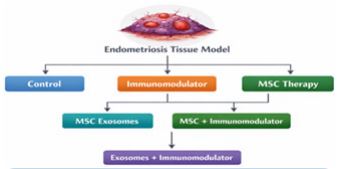
Figure 2: Experimental groups in the endometriosis translational model control, immunomodulation, MSC therapy and combination treatment strategies.
Outcome Measures (Figure 3)
• Cytokine levels (IL-6, IL-8, TNF-α, IL-1β)
• Macrophage phenotype (M1 → M2)
• NK cell activity
• Fibrosis and angiogenesis markers
• Neurogenic inflammation markers (NGF, substance P)
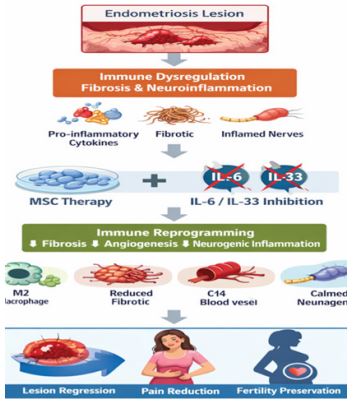
Figure 3: Mechanistic overview of MSC-based immunomodulation in endometriosis. Endometriotic lesions drive immune dysregulation, fibrosis, and neuroinflammation. Combined Mesenchymal Stem Cell (MSC) therapy and cytokine pathway inhibition (IL-6/ IL-33) may restore immune balance, reduce fibrosis and angiogenesis, suppress neurogenic inflammation, and ultimately promote lesion regression, pain reduction, and fertility preservation.
In vivo validation
Rodent models will evaluate:
• Lesion regression
• Immune modulation
Fibrosis reduction
• Pain-related behavioural outcomes
Safety and translational readiness
GLP-compliant toxicology studies in rabbits will assess:
• Biodistribution
• Immunogenicity
• Tumorigenicity
• Repeat-dose safety
These data provide the foundation for first-in-human trials.
Expected impact and innovation
This design offers a non-hormonal, disease-modifying strategy. By integrating regenerative medicine with immunotherapy, it preserves fertility, reduces recurrence, and allows personalized, biomarker-guided therapy (Figure 4).
Significance & novelty
This is a novel translational framework for combining MSC therapy with targeted immunomodulation in endometriosis. It simultaneously addresses immune dysfunction, fibrosis, and neurogenic inflammation. The multi-tiered preclinical approach ensures clinically relevant data and accelerates translation to human trials. By targeting the underlying disease mechanisms rather than just symptoms, this strategy represents a paradigm shift in endometriosis treatment [11,12].
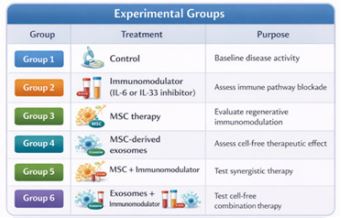
Figure 4: Overview of experimental treatment groups investigating MSC based immunomodulation in Endometriosis.
Limitations
While the proposed framework integrates multiple experimental platforms, it remains a conceptual translational design. The therapeutic hypotheses require validation in controlled experimental models and clinical trials. Additionally, the complex immunological heterogeneity of endometriosis may influence therapeutic responsiveness across patient populations.
Endometriosis remains a complex, chronic disease with limited treatment options. This study design—combining MSC therapy with targeted immunomodulation—directly addresses the key drivers of lesion persistence, pain, and fibrosis. It provides a non-hormonal, fertility-preserving, and disease-modifying strategy. If successful, it could transform the clinical management of endometriosis by reducing recurrence, restoring tissue homeostasis, and improving reproductive outcomes. The proposed framework represents a scientifically robust, clinically relevant, and highly novel contribution, offering a roadmap for next-generation therapies and justifying its publication in a journal.
Translational clinical trial roadmap
Following successful completion of preclinical validation, the proposed therapeutic strategy may progress to early-phase clinical trials. A phase I study would primarily evaluate safety, tolerability, and immunological responses following administration of MSCs combined with cytokine pathway inhibition in patients with moderate-to-severe endometriosis. Biomarker profiling—including circulating cytokines, macrophage phenotype markers, and neuro-inflammatory mediators—would be used to assess biological activity. Subsequent phase II trials could investigate clinical efficacy, focusing on pain reduction, lesion regression assessed by imaging, and fertility outcomes. Patient stratification using immunological biomarkers may enable personalized therapy approaches. This translational roadmap provides a practical pathway for moving from mechanistic discovery to clinical implementation.
Ethical approval
Nurax Clinics ethical committee approval has been taken, IRB Protocol ID: NRX-IRB-CTI-2026-001 Clinical Study Registry ID: NRX-REG-2026-014 Approval Date: 10-02-26 (Its institutional ethical clearance number for the study to conduct).
Consent to participate
Informed consent was prepared for all induvial participants and will be obtained from all individual participants who are included in this study.
Human ethics and consent to participate declaration
This study was designed in accordance with the ethical standards of the institutional research committee and with the 1964 Helsinki Declaration and its later amendments. Informed consent was prepared to obtain from all individual participants who will be included in this study.
Written consent for publication
Written informed consent for publication was obtained from all participants included in this study. Patients were informed about this purposes of the research, nature of the intervention and using for clinical data’s for publications.
Availbalaty of data and materials
The datasets generated and/or analysed during the current study are available from the corresponding author on reasonable request.
Code availability
No custom code or software was used in this study. Standard validated statistical methods were utilized for this study.
Authors contribution
U.J: Manuscript Review and Clinical Analysis; K.A.G: Manuscript Review and Clinical Analysis; P.M: Clinical study design, Original manuscript drafting, and Analysis.
We always work towards offering the best to you. For any queries, please feel free to get in touch with us. Also you may post your valuable feedback after reading our journals, ebooks and after visiting our conferences.

