


| Received | : | Mar 02, 2026 |
| Accepted | : | Mar 25, 2026 |
| Published Online | : | Apr 01, 2026 |
| Journal | : | Journal of Autism Research |
| Publisher | : | MedDocs Publishers LLC |
| Online edition | : | http://meddocsonline.org |
Cite this article: Kearney PJ. Environmental and Structural Correlates of Alzheimer’s Disease and Autism: A Cross-National Ecological Analysis Using Artificial Intelligence. J Autism Res. 2026; 4(1): 1008.
Background: Alzheimer’s Disease (AD) and Autism Spectrum Disorder (ASD) vary widely across countries. While genetics contribute substantially, environmental and structural factors may also influence population-level patterns. This ecological analysis evaluates whether aluminum consumption, aluminum can usage, air pollution, water quality, and urbanization co-vary with national burdens of AD and ASD. Artificial Intelligence (AI) was used as an analytic tool to support data processing and correlation assessment.
Methods: Ten countries representing diverse environmental and demographic contexts were selected. Publicly available data on AD incidence, ASD prevalence, aluminum consumption, aluminum can usage, air pollution indices, water quality indices, and urbanization rates were compiled. Correlation analyses were conducted using AI-assisted tools, and results were visualized in a correlation matrix heatmap.
Results: AD incidence demonstrated strong positive correlations with aluminum consumption (r=0.96) and aluminum can usage (r=0.94). A strong negative correlation was observed with air pollution (r=−0.96). ASD prevalence showed moderate to strong positive correlations with aluminum consumption (r=0.80), aluminum can usage (r=0.84), and urbanization (r=0.76). Environmental metrics were highly interrelated, including a strong inverse correlation between air pollution and water quality (r=−0.99).
Conclusions: A consistent ecological pattern emerged: higher aluminum consumption and greater urbanization were associated with higher national burdens of AD and ASD. These findings are hypothesis-generating and underscore the need for individual-level research to clarify mechanisms and disentangle environmental exposures from diagnostic and structural influences.
Keywords: Alzheimer’s disease; Autism spectrum disorder; Aluminum exposure; Air quality; Water quality; Urbanization; Ecological study; Environmental epidemiology.
Alzheimer’s Disease (AD) and Autism Spectrum Disorder (ASD) are complex neurological conditions with multifactorial origins. While genetics contribute significantly, environmental exposures and structural factors may also influence risk. Aluminum exposure has long been debated in relation to neurodevelopment and neurodegeneration, though evidence remains mixed. Animal studies demonstrate neurotoxicity at high doses [2,3,17], and aluminum is ubiquitous in modern environments due to industrial use, food packaging [9,12] and consumer products. In addition, research has ruled out multiple causes to include vaccines that contain aluminum [9,14,15,16]. Interestingly, there was recently published evidence that vaccines might be useful to decrease dementia, which similarly to Alzheimer’s disease and autism, can have a severe impact on cognition [18,21,22].
Deodorants containing aluminum were considered in this paper, but the prevailing evidence excludes deodorants as a cause since very little aluminum is dermally absorbed [1].
It was also known that previous research on autism found links to public awareness and medical care. Countries with higher education rates and better medical care will also have more resources to diagnose autism, leading the prevalence to increase worldwide. Families with better education would better be able to identify autistic tendencies with their children, leading to medical attention and diagnosis. Our current definition of autism spectrum disorder was so broad that in less developed countries, only individuals with life-changing symptoms may be diagnosed.
Aluminum cans used for beverages were determined as not causal because the small amounts of aluminum present in the beverages were quite small and approximately, 0.05 to 0.3 mg per can used [17,27].
Anecdotally, it could be possible that the higher prevalence of autism occurs in countries like Japan and South Korea, which have significant industries of car production and aluminum consumption on a per capita basis [7].
For Alzheimer’s disease, pathologic tangles are composed of aluminum, but it is largely believed that it may reflect the accumulation of aluminum from dialysis for the treatment of kidney failure [24]. There were many similar symptoms of AD that link might link it ASD through common causes, such as aluminum exposure, especially true for cognitive changes and deterioration [23].
Furthermore, the use of Artificial Intelligence (AI) is used more and more in research with pros, cons, and limitations very well specified [21,22].
This population-based research examines possible causes: whether aluminum consumption, aluminum can usage, the air pollution index, the water quality index, and urbanization covary with national burdens of Alzheimer’s disease and autism (not vaccine related) from environmental and possibly occupational exposures. This research used artificial intelligence as a tool for data analysis.
Study design: This ecological, cross-national analysis included ten countries selected for their diverse environmental, cultural, and demographic characteristics. Publicly available data sources were used to compile national estimates of AD incidence [8], ASD prevalence [7] for 8-year-olds, aluminum consumption, aluminum can usage [25] in Table 1. Air pollution indices, water quality indices, and urbanization rates data was compiled by AI.
Data sources
AD and ASD data were obtained from World Population Review [7,8,11]. Aluminum consumption and can usage data were compiled from publicly available environmental and industrial datasets [25] but used can recycling data as a proxy since aluminum can consumption per se was not available. Air pollution and water quality indices were generated using AI-assisted autofill functions based on global environmental databases [13]. Urbanization rates were derived from international demographic sources.
Analytic approach
Data were organized into a spreadsheet and analyzed using AI-assisted correlation tools (Microsoft CoPilot). Pearson correlation coefficients were calculated for all variable pairs. Results were visualized in a correlation matrix heatmap, Figure 1.
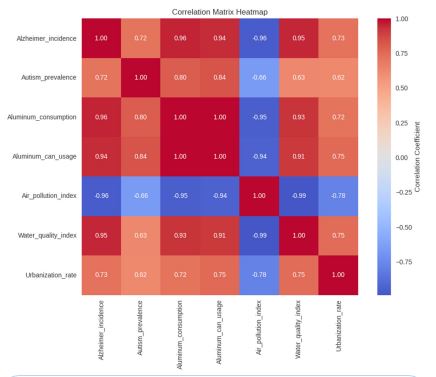
Figure 1: Algorithm for management of Postoperative Neck He
The following results demonstrated the most notable correlations across 10 countries:
Alzheimer’s Disease
• Aluminum consumption: r=0.96 (very strong positive correlation)
• Aluminum can usage: r=0.94 (strong positive correlation)
• Water quality index: r=0.95 (higher water quality associated with higher AD incidence; may reflect healthcare access or longevity)
• Air pollution index: r=−0.96 (strong negative correlation; may reflect underdiagnosis or reduced life expectancy in high-pollution settings)
Autism Spectrum Disorder
• Aluminum consumption: r=0.80 (moderate positive correlation)
Aluminum can usage: r=0.84 (moderate to strong positive correlation)
• Urbanization: r=0.76 (higher urbanization associated with higher ASD prevalence, likely reflecting diagnostic access)
• Environmental Metrics
• Air pollution vs. water quality: r = −0.99 (strong inverse relationship)
• Air pollution vs. urbanization: r = −0.78 (more urbanized countries tend to have better air quality)
 Table 1
Table 1: Alzheimer’s disease incidence, autism prevalence, aluminum consumption, and aluminum can usage across ten countries.
This ecological analysis revealed a coherent and method-robust pattern: countries with higher aluminum consumption and greater urbanization consistently exhibit higher burdens of AD and ASD. Urbanization’s strong association with autism aligns with known relationships between diagnostic access, healthcare infrastructure, and public awareness. Air pollution might be confounding with the possibly negative correlation or protection, but it was proven that there are higher environmental/ pollution controls in urban areas.
These findings suggest that future investigation of aluminum and autism risk should prioritize individual level exposure assessment and designs that can disentangle environmental influences from differential diagnosis. Aluminum consumption’s consistent positive association suggests it may be part of a broader environmental exposure characteristic of industrial settings.
Ideally for future research, studies focused on well-characterized cohorts, with standardized diagnostic procedures and direct aluminum exposure measures (e.g. biomarkers or detailed dietary assessments), are far better suited to address mechanistic questions than ecological analysis from population data.
Furthermore, with the strong correlation between environmental exposure to aluminum as a probable contribution to autism and Alzheimer’s, further research is warranted. In addition, there are policy implications: Countries with high aluminum exposure and good water quality may need targeted Alzheimer’s autism screening. Again, further research is indicated.
Lastly, similar possible Diethylstilbestrol (DES) long term effects on in-utero health and development (4) might be established or excluded for aluminum from future research.
AI-assisted analysis facilitated rapid data processing and visualization, demonstrating the utility of AI as a research tool [5,6,19,20]. However, AI-generated environmental variables should be interpreted cautiously and validated against primary data sources.
This cross-national ecological analysis identified strong correlations between aluminum consumption, urbanization, and national burdens of AD and ASD. These findings are hypothesisgenerating and highlight the need for individual-level studies incorporating direct exposure assessment, standardized diagnostic criteria, and mechanistic evaluation.
Study limitations
1. This is an ecological population study
2. The incidence of autism is limited, but prevalence data is available and widespread
3. The potential lag effect of cause and outcome complicates direct evidence because sometimes cohorts of different years are compared for analysis
4. Possible surveillance bias in modern countries (PAS): Previous work done on autism that found links to public awareness and medical care. Countries with higher education rates and better medical care will also have more resources to diagnose autism, leading the prevalence to increase. Families with better education would better be able to identify autistic tendencies with their children, leading to medical attention and diagnosis (26).
5. Small sample size
6. Aluminum can usage per capita was approximated by data for aluminum can recycling since the former data was not available. Author acknowledged that recycling rates vary widely, and aluminum can consumption might be grossly overestimated or underestimated.
The entire research manuscript was reviewed by Microsoft Word and CoPilot.
We always work towards offering the best to you. For any queries, please feel free to get in touch with us. Also you may post your valuable feedback after reading our journals, ebooks and after visiting our conferences.

