


| Received | : | Mar 23, 2026 |
| Accepted | : | Apr 27, 2026 |
| Published Online | : | May 04, 2026 |
| Journal | : | International journal of Innovative Surgery |
| Publisher | : | MedDocs Publishers LLC |
| Online edition | : | http://meddocsonline.org |
Cite this article: Gubbala K, Rajagopal S, Sravanan MN, Das A. Full Thickness Diaphragm and Central Tendon Resection Using Stapler to Achieve Complete Cytoreduction in Advanced or Recurrent Ovarian Cancer. Int J Innov Surg. 2026; 8(1): 1050.
Introduction: Advanced ovarian cancers usually present with extensive peritoneal disease. Diaphragmatic involve ment is very common in advanced ovarian malignancies. About two-thirds of patients with advanced ovarian cancer have diaphragmatic involvement and require diaphragm peritonectomy or full thickness resection to achieve com plete cytoreduction.
Methods: Retrospective analysis of four patients with advanced and recurrent ovarian cancer underwent dia phragmatic resection with stapler
Results: Complete cytoreduction was achieved in all five patients with minimal complications.
Conclusion: Full thickness resection can be done using surgical stapler which in turn helps decrease the post-oper ative complications like effusion and pneumothorax. It also helps in resecting the disease on the central tendon of the diaphragm where peritoneal stripping is difficult and pre vents the entry in to the pleural cavity.
Novel points: Full thickness diaphragmatic resection us ing stapler; Less chest complications; Resection of central tendon.
In 2022, around 325,000 new ovarian cancers were diag nosed worldwide. Due to the lack of specific symptoms, three quarters of all patients affected by ovarian cancer present with advanced stage disease (International Federation of Gynaecolo gy and Obstetrics stage IIIC–IV), Cytoreductive or Debulking sur gery remains the cornerstone of management in these patients, either as a primary treatment or after neo-adjuvant chemotherapy. Diaphragm involvement is a common site of metastasis and represents a significant limitation in achieving optimal cy toreduction. About 40%-70% of patients with advanced ovarian cancer have diaphragmatic involvement and require diaphragm peritonectomy or full thickness resection to achieve complete cytoreduction [1,2]. Diaphragmatic stripping is a standard pro cedure that is performed in a significant proportion of patients undergoing surgical cytoreduction for advanced ovarian cancer [3]. However, Diaphragmatic resection rules out even the slight est possibility of suboptimal debulking and addresses the need for a complete cytoreduction. Surgical stapler is used to resect disease to achieve complete cytoreduction where there is full thickness involvement and at the central tendon and it also re duces complications.
We had five patients who were diagnosed with advanced and recurrent ovarian cancer who needed resection of the dis eased diaphragm at our institution. All patients were seen in the department of Gynaecological oncology and discussed in multidisciplinary meeting. Informed consent from the patients and approval of ethics committee was obtained. They all un derwent an explorative laparoscopy to assess the feasibility of complete cytoreduction. All of them were high grade serous ovarian carcinoma, of which four patients had neo-adjuvant chemotherapy and underwent interval cytoreduction post 3-4 cycles of chemotherapy and the remaining patient underwent secondary cytoreductive surgery for recurrence.
We used echelon stapler (ethicon) either green or gold re load depending on the thickness of the tissue (Figure 1). A 0-PDS continuous suture was used to reconstruct the pleura and diaphragm where there were other smaller defects. To de crease the risk of pneumothorax we manually ventilate the pa tient and a silicone Foley catheter was placed in the pleural cav ity through one of the smaller defects. Negative pressure was applied by suction along with concomitant manual ventilation. The catheter was then deflated and removed at the time of last stich to prevent pneumothorax. Air leak test was performed in the diaphragmatic area with Valsalva to check the integrity.
Among the five patients, two needed full thickness resec tions at two different areas. One among this had both HIPEC (Hyperthermic Intraperitoneal Chemotherapy) and HITOC (Hy perthermic Intrathoracic Chemotherapy) with pleurectomy, thoracic nodes (Figure 2) resected and other patient had partial liver resection along with diaphragm and VATS (Video Assisted Thoracic Surgery) for resection of mediastinal nodes. Overall, two patients required a chest drain insertions and was able to avoid in the other three patient since there were no multiple diaphragmatic defects
We were able to achieve complete cytoreduction in all the four patients.
None of the patients had complications like, pneumothorax or haemothorax or pulmonary embolism. One patient alone had chest infection. Median hospital stay was 10 days. Median operating time 660 min. post-operative histology showed full thickness involvement of peritoneum and muscle in three pa tients and peritoneum, muscle and pleura in one patient.
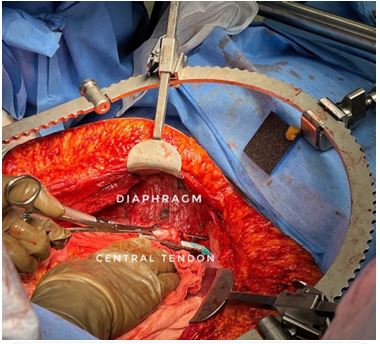
Figure 1: Diaphragmatic resection using Stapler.
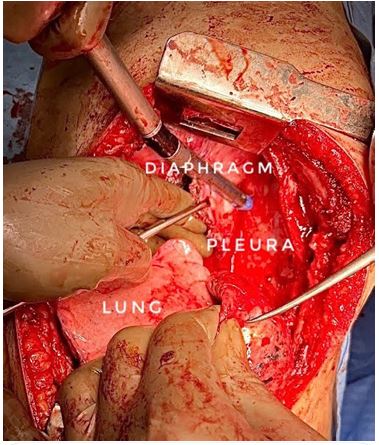
Figure 2: Resection of diaphragm from the Thoracic aspect. Image source - The above two figures are the intraoperative im ages taken while performing Cytoreductive Surgery in our opera tion theatres with prior consent from our patients.
Resection of all visible disease is the key for survival in cy toreductive surgery in patients having primary advanced or recurrent ovarian cancer [4-6]. Upper abdominal procedures especially involving the diaphragm is common in advanced ovarian cancers in order to achieve complete cytoreduction [4]. Surgical procedure on the diaphragm either involves peritoneal stripping or diaphragmatic full-thickness resection in advanced or recurrent ovarian cancer. It involves complex surgical procedures and meticulous dissection to mobilise the liver. Various types of liver mobilisation were described by Tozzi et al for dif ferent presentations of diaphragmatic disease [2].
Diaphragmatic surgery and accessing the pleural cavity at time of abdominal surgery is associated with high perioperative morbidity [7].
Metanalysis performed by Bogani.et al showed pleural effu sion rate was around 43% with diaphragmatic peritoneal strip ping and 51% after full thickness resection. The need for chest tube placement and postoperative pneumothorax is 9% [8].
This technique using the stapler to respect the diaphragm prevents opening of the pleural cavity which in turn increase post operative complications like effusion and pneumothorax. It also helps in resecting the disease on the central tendon where peritoneal stripping is difficult post neoadjuvant chemotherapy as it is difficult to separate the planes.
This novel technique is easy to perform, safe, reduces post operative complications and in resection of disease on the dia phragm.
Disclosure and conflict of interest
None of the authors have any conflict of interest to declare and any disclosures to make.
We always work towards offering the best to you. For any queries, please feel free to get in touch with us. Also you may post your valuable feedback after reading our journals, ebooks and after visiting our conferences.

