


| Received | : | June 12, 2025 |
| Accepted | : | July 08, 2025 |
| Published Online | : | Online: July 15, 2025 |
| Journal | : | Annals of Orthopedics and Sports Medicine |
| Publisher | : | MedDocs Publishers LLC |
| Online edition | : | http://meddocsonline.org |
Cite this article: Sidimé S, Camara T, Diallo AMF, Baccouche D, Koivogui B, et al. Surgical Management of a Bilateral Calcaneal Tendon Wound in A 9-Year-Old Child at the Orthopedic-Traumatology Department of the Donka Conakry University Hospital. Ann Orthop Sports Med. 2025; 1(1): 1001.
Injuries to both calcaneal tendons are rare traumatic injuries in children. They are mainly due to direct trauma inflicted simultaneously on the posterior surfaces of both ankles. The need for rapid and specialized management of calcaneal tendon injuries in children. Early surgical repair is crucial to allow optimal healing and minimize complications.
Keywords: Childhood; Wounds; Calcaneal tendons; Trauma.
Calcaneal tendon (Achilles tendon) injuries are rare in children, and bilateral injuries are even rarer. Their management is delicate and requires early surgical repair to optimize the functional prognosis. We present a clinical case of bilateral calcaneal tendon injury in a 9-year-old child, with a discussion on the diagnostic, therapeutic, and rehabilitation aspects. The objective of this study is to ensure management and evaluate the outcome.
Clinical observation
A 9-year-old girl was admitted to the emergency department following a fall on a sharp object (sheet metal), resulting in deep wounds on the posterior surfaces of both heels. Initial clinical examination revealed two clear, transverse wounds, approximately 5 cm each, located 3 cm above the calcaneal insertion of the Achilles tendon, bilaterally. Active ankle mobilization revealed an inability to plantarflex against resistance on both sides, suggesting a complete rupture of the calcaneal tendons. Skin sensation was preserved and there was no distal vascular deficit (Figure 1A & B).
The child’s medical history is unremarkable.
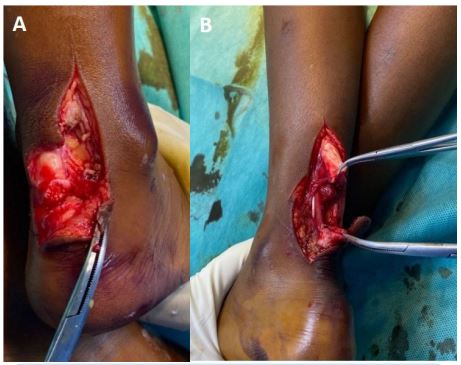
Figure 1: Wounds with total section of the right (A) and left (B) calcaneal tendons.
Additional report
An ankle X-ray was performed to rule out an associated bone lesion, which was found to be normal. Tendon ultrasound was not performed because the rupture was complete and clear of both calcaneal tendons, with a diastasis of approximately 2 cm visible between the tendon edges (Figure 1A & B).
Therapeutic management
The surgical indication is made urgently. The intervention is performed under general anesthesia.
• Surgical preparation: The patient is placed in the ventral decubitus position. Strict asepsis is carried out and sterile drapes are placed.
• Exploration and repair:
o The wounds are enlarged slightly to allow good visualization of the anatomical structures.
o The edges of the calcaneal tendons are identified. These are clean ruptures, without significant fraying (Figures 1A & B).
o An end-to-end suture is performed for each tendon. Several suture techniques are possible; in this case, a modified Kessler suture was used, supplemented by running stitches. The objective is to obtain a strong and resistant repair, while respecting tendon irrigation (Figures 2A & B 3A-E).
o After suturing, plantar flexion is passively tested to verify that there is no excessive tension on the repair.
o Abundant washing of the wounds is carried out and a layerby-layer skin closure is performed.
• Post-operative immobilization: Plastered cruro-pedal splints, maintaining the feet in slight plantar flexion (approximately 20 degrees) and the knee in slight flexion, are placed bilaterally. This position helps reduce tension on the tendon sutures.
Post-operative care and rehabilitation
• Hospitalization: The child is hospitalized for 3 days. The pain is managed with appropriate analgesics. The dressings and skin condition are carefully monitored.
• Initial immobilization (0-4 weeks): Plaster splints are kept in place for 4 weeks.
• Complete relief is imperative.
• Start of rehabilitation (4-8 weeks):
o The casts are removed. Walking boots with heel wedges are placed to maintain progressive plantar flexion and protect the tendon.
o Start of gentle passive mobilization of the ankle in limited ranges.
o Gentle isometric exercises of the calf muscles are introduced.
o Partial weight bearing is permitted with the help of crutches, gradually increasing the weight.
• Advanced Rehabilitation (8-12 weeks and beyond):
o Gradual removal of heel wedges in walking boots.
o Progressive increase in active ankle range of motion.
o Progressive muscle strengthening of the calf muscles (concentric and eccentric exercises).
o Proprioception and balance exercises.
o Walk without assistance, then gradually resume daily activities.
o Resumption of sporting activities is generally considered after 4 to 6 months, under medical and physiotherapy supervision.
Evolution
Six months post-operatively, the child shows good bilateral functional recovery. Walking is normal, ankle range of motion is almost complete, and calf muscle strength is satisfactory. He is gradually returning to his usual sports activities.
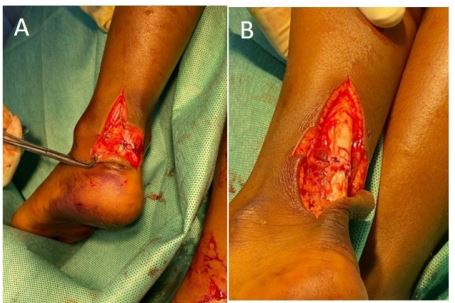
Figure 2A&2B: Image of the right tendon sutures.
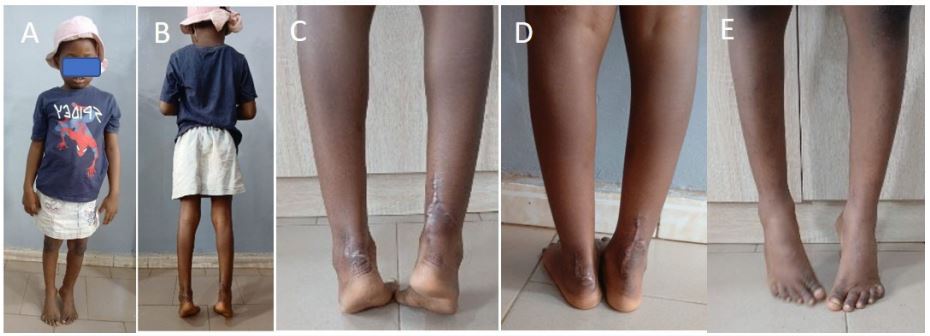
Figure 3A&E: Functional assessment images.
This case illustrates the need for rapid and specialized management of calcaneal tendon wounds in children. Early surgical repair is crucial to allow optimal healing and minimize complications (tendon lengthening, stiffness). In the literature, several studies [1-3] opt for restoring tendon continuity by frame suture of the tendon with reinforcement by hemi-overlock stitches (Kessler technique) with a 2/0 Nyon thread. We used this frame suture technique but with reinforcement by simple overlock stitches.
Studies on calcaneal tendon injuries in children are rarely reported in the literature [4,5]. For Lamah L. [1] et al. These lesions are common in their context.
Rehabilitation plays a fundamental role in functional recovery, allowing for a gradual restoration of strength, range of motion, and coordination. All authors agree that rehabilitation is essential. The exit from the immobilization [6-8].
Although rare, bilateral calcaneal tendon injuries in children require special attention due to the potential impact on gait and motor development. Collaboration between pediatric orthopedic surgeons and physical therapists is essential to ensure optimal results.
Surgical management of a bilateral calcaneal tendon injury in a 9-year-old child, followed by rigorous rehabilitation, resulted in an excellent functional prognosis. This case highlights the importance of early diagnosis and prompt intervention to ensure the best possible recovery.
Conflict of interest
The authors have declared no conflicts of interest. All authors contributed directly or indirectly to the conduct of this study. Informed consent was signed by the parents and the ethics committee of Donka University Hospital gave its approval.
We always work towards offering the best to you. For any queries, please feel free to get in touch with us. Also you may post your valuable feedback after reading our journals, ebooks and after visiting our conferences.

