


| Received | : | Sep 16, 2026 |
| Accepted | : | Sep 29 2026 |
| Published Online | : | Online: Oct 06, 2026 |
| Journal | : | Annals of Neurology and Neurosurgery |
| Publisher | : | MedDocs Publishers LLC |
| Online edition | : | http://meddocsonline.org |
Cite this article: Jafarova U, Guliyeva KA, Ahemad N, Matis G, Kaura S, et al. The Efficacy of Sacral Nerve Stimulation for Neurogenic Bladder Syndrome: Multicenter Study over 12 months follow-ups. Ann Neurol Neurosurg. 2026; 5(2): 1016.
Background: Refractory Lower Urinary Tract Dysfunction (LUTD), including detrusor hyperreflexia and overactive bladder, significantly affects quality of life when conservative and pharmacological treatments fail. Sacral Nerve Stimulation (SNS) has emerged as an effective neuromodulatory therapy, though it needs more clinical studies to measure its efficacy.
Objective: To evaluate the efficacy of SNS in patients with refractory LUTD using objective voiding diary parameters over a 12-month follow-up period.
Methods: This retrospective observational study included 12 patients (7 females, 5 males; age range 15–45 years) who underwent SNS implantation. All patients were evaluated with urodynamic studies and 24-hour voiding diaries before implantation and at 12 months postoperatively. Outcome measures included voiding frequency, mean voided volume, and urinary leakage episodes. Pre- and post-implantation outcomes were compared using paired t-tests.
Results: SNS therapy resulted in significant improvement across all parameters. Voiding frequency per 24 hours was markedly reduced (p<0.0001). Mean voided volume significantly increased at 12 months (p<0.0001), reflecting improved bladder capacity. Urinary leakage episodes were significantly reduced, with several patients achieving complete continence (p<0.0001).
Conclusion: SNS provides significant and sustained improvement in objective urinary outcomes and represents an effective treatment option for patients with refractory LUTD.
Keywords: Sacral nerve stimulation; Neuromodulation; Overactive bladder; Lower urinary tract dysfunction; Urinary incontinence.
The application of Sacral Nerve Stimulation (SNS) has drawn considerable attention as a modality of innovative treatment for neurogenic urinary incontinence, in particular in the context of patients suffering from various neurological disorders. This interest derives largely from the shortcomings of traditional pharmacological approaches, such as anticholinergics (for example, oxybutynin), which are often associated with harmful side effects. As indicated by Sahu et al. (2024), SNS has become a promising alternative, demonstrating significant improvements in patient bladder control and the overall quality of life [12,14]. The efficiency of the SNS lies mainly in its ability to modulate the neuronal routes responsible for urinary storage and urination, thus approaching the underlying dysfunction associated with neurogenic bladder conditions [5,18]. In some cases, incomplete or complete Spinal Cord Injuries (SCIs) disrupt the central control of bladder function, often resulting in Neurogenic Lower Urinary Tract Dysfunction (NLUTD), manifesting as urinary incontinence, urgency, or urinary retention [15]. This condition significantly impairs the quality of life and increases risks of recurrent Urinary Tract Infections (UTIs), vesicoureteral reflux, renal damage, and psychosocial stress. In world, the prevalence of traumatic SCI is increasing, particularly among younger adults due to road traffic accidents, falls, and occupational injuries [16,17]. Conservative management for neurogenic bladder includes clean intermittent catheterization, anticholinergic medications, bladder training, and botulinum toxin injections. However, these therapies often yield suboptimal results, have side effects (e.g., dry mouth, constipation), and are not sustainable long-term in many patients. Therefore, alternative therapies such as SNS have gained attention [11,13,15,17].
SNS was first introduced in the late 1980s, involves electrical stimulation of the S3 (or S4) sacral nerve roots, which modulate afferent and efferent pathways involved in micturition reflexes. Though SNS is FDA-approved for idiopathic urinary incontinence and urinary retention, its use in neurogenic cases (like SCI) is still considered off-label in many regions and remains underexplored in the world population [1,5,9].
The pilot study conducted by Ojha et al. (2015) serves as a pivot reference in this area, because it specifically addresses the impacts of the peripheral nerve stimulation on the overactivity of the detrusor - a common affliction in LUTD patients [7,10]. The results claim the potential effectiveness of SNs in the attenuation of the hyperactivity of the bladder, thus emphasizing its relevance not only for urinary incontinence but also for wider problems linked to the dysfunction of the bladder after the injury. This is aligned with the essential objective of improving the rehabilitation results for people with spinal cord lesions [1,2,4].
In addition, SNS safety profile remains a crucial concern for clinicians and patients. Preliminary data suggest that the incidence of adverse events is relatively low, most patients tolerate the procedure. However, long-term studies are needed to assess potential complications and sustainability of treatment benefits. As such, current and future surveys must focus not only on immediate results but also on the sustainability of SNS effects over time, informing clinical decision -making and patient management [3,5]. The patient surveys, illustrated by the work of Rai et al. (2025), are also crucial to advancing the understanding of SNS safety in neurogenic urinary incontinence [18]. By prioritizing the experiences and results of patients, their research highlights the importance of incorporating the results declared by patients and satisfaction measures in safety assessments. This approach promotes a culture of transparency and active engagement of patients, which can shed light on the previously neglected dimensions of the side effect profile associated with SNS [11,15].
Study design and patients: This was a retrospective observational study of patients who underwent SNS for refractory LUTD. A total of 12 patients were included in the analysis. The cohort consisted of 7 females and 5 males, with ages ranging from 15 to 45 years. All patients had persistent symptoms despite standard conservative and medical management. This study was approved by the instituinoal review board according to Helsinki declaration.
Clinical characteristics: Primary diagnoses included detrusor hyperreflexia / overactive bladder, with associated sphincter dyssynergia in selected cases. All patients underwent baseline evaluation including clinical assessment and urodynamic studies prior to SNS implantation.
Outcome measures: Patients maintained 24-hour voiding diaries before implantation and at 12 months following SNS therapy. The following parameters were analyzed:
1. Voiding frequency per 24 hours
2. Mean voided volume (mL)
3. Urinary leakage episodes per 24 hours
Statistical analysis: Continuous variables were expressed as mean values. Comparisons between pre-implantation and postimplantation outcomes were performed using paired t-tests. A p-value of < 0.05 was considered statistically significant. Statistical analysis was performed for all outcome measures. We used here pvalue.io software, version 2024, developer by medistica, USA.
Surgical details
Preoperative preparation: Prior to surgery, patients undergo comprehensive clinical evaluation, including symptom assessment, voiding diaries, and urodynamic studies to confirm the diagnosis and suitability for SNS therapy. Written informed consent is obtained from all patients. Prophylactic antibiotics are administered according to institutional guidelines.
Patients are positioned in the prone position with adequate padding to allow fluoroscopic access to the sacral region. The sacral anatomy is identified using fluoroscopy, with particular focus on the S3 sacral foramen, which is the preferred target for neuromodulation due to its optimal balance of motor and sensory responses.
Stage I: Test stimulation (Lead placement): Under fluoroscopic guidance, a foramen needle is inserted into the S3 sacral foramen. Correct needle placement is confirmed by both fluoroscopic imaging and physiological responses to electrical stimulation. Desired motor responses include bellows contraction of the pelvic floor, plantar flexion of the great toe, and anal sphincter contraction, while sensory responses are reported in the perineal or vaginal/rectal region.
Once appropriate positioning is confirmed, a quadripolar tined lead is introduced through the needle and positioned adjacent to the sacral nerve root. The lead is tested intraoperatively to ensure optimal stimulation thresholds and appropriate res- ponses across multiple electrode configurations.
The lead is then secured in place using its self-anchoring tines. The proximal end of the lead is tunneled subcutaneously and connected to an external pulse generator for the trial stimulation period. The incision is closed in layers.
Patients typically undergo a test stimulation period of 3-7 days, during which symptom improvement is assessed using voiding diaries. A successful trial is defined as ≥50% improvement in key symptoms.
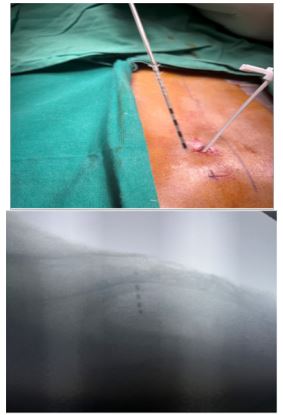
Figure 1 & 2: SNS Implantable Electrodes, (Medtronic InterStimII SNS system).
Stage II: Permanent implantation
Patients demonstrating a successful response during the test phase proceed to permanent implantation. Under local or general anesthesia, the previously placed lead is connected to a permanent İmplantable Pulse Generator (IPG). A subcutaneous pocket is created, most commonly in the upper gluteal region, to accomodate the IPG. The lead extension is tunneled to the pocket and securely connected to the IPG. Device integrity and stimulation parameters are verified intraoperatively. The IPG is programmed using an external programmer, and optimal stimulation parameters are selected based on patient comfort and therapeutic response. The surgical wounds are closed in layers, and sterile dressings are applied.
Postoperative management and programming
Following implantation, patients receive postoperative instructions regarding wound care and activity restriction to prevent lead migration. Initial device programming is adjusted during follow-up visits to optimize symptom control.
Patients are monitored regularly, and stimulation parameters such as amplitude, pulse width, and frequency are individualized based on clinical response. Long-term follow-up includes symptom assessment, voiding diaries, and device checks.
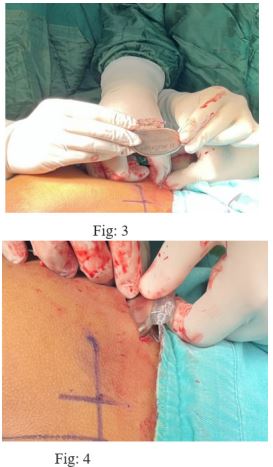
Figure 3&4: SNS IPG Insertion post Lead Implantation.
Stimulation parameters are individually optimized post-implantation:
Frequency: 10–20 Hz, Pulse Width: ~210-260 microseconds, Amplitude: 1.5 -8.0 mA. In some patients we used cycling programming methods also.
All 12 patients completed a minimum follow-up of 12 months after SNS implantation.
Voiding frequency: SNS therapy resulted in a marked reduction in voiding frequency across all patients. Mean voiding frequency per 24 hours significantly decreased following SNS implantation compared to baseline (p<0.0001) (Table 1, Figure 5).
Mean voided volume: Mean voided volume demonstrated a substantial increase after SNS therapy. Post-implantation volumes were significantly higher compared to pre-implantation measurements (p<0.0001), indicating improved bladder storage capacity (Table 1, Figure 6).
Urinary leakage episodes: A significant reduction in urinary leakage episodes per 24 hours was observed following SNS implantation. Several patients achieved complete continence. Overall, the reduction in leakage episodes was statistically significant (p<0.0001) (Table 2, Figure 7).
These results collectively demonstrate significant functional improvement in bladder storage and continence following SNS therapy.
Clinical outcomes of SNS in our patients over 12 months’ follow-up
 Table 1
: Voiding frequency and mean voided volume.
Table 2
Table 2: Urinary leakage episodes per 24 hours.
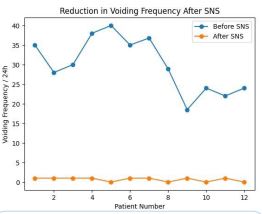
Figure 5: Change in voiding frequency per 24 hours before and 12 months after SNS demonstrating a significant reduction following therapy.
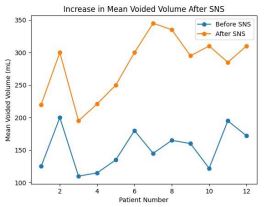
Figure 6: Mean voided volume (ml) before and after SNS implantation showing a significant increase at 12 month follow up.
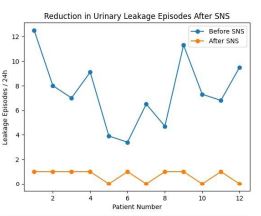
Figure 7: Urinary leakage episodes per 24 hours before and after SNS illustrating marked improvement following Neuromodulation therapy.
Sacral Nerve Stimulation (SNS) has become an established therapeutic option for patients with refractory LUTD, yet continued reporting of objective clinical outcomes remains essential to refine patient selection and optimize long-term management strategies [1,2]. The findings of the present study demonstrate that SNS provides marked and statistically significant improvements across multiple objective voiding parameters, including voiding frequency, mean voided volume, and urinary leakage episodes, at 12 months of follow-up. These results reinforce the role of SNS as a durable neuromodulatory intervention capable of restoring functional bladder control in patients who have failed conventional therapies.
One of the most striking outcomes observed in this cohort was the profound reduction in voiding frequency following SNS implantation. Excessive voiding frequency is a hallmark symptom of detrusor overactivity and reflects abnormal sensory signaling from the bladder to supraspinal centers. SNS is thought to exert its therapeutic effect by modulating afferent input at the level of the sacral spinal cord, thereby suppressing pathological reflex activity while enhancing inhibitory control mechanisms. The dramatic reduction in voiding episodes ob-served in this study suggests effective normalization of bladder sensory pathways and improved central processing of bladder filling signals [3,4,7].
In parallel, the significant increase in mean voided volume following SNS therapy provides objective evidence of enhanced bladder storage capacity. Improved bladder capacity is clinically relevant, as it directly translates into fewer urgency episodes, improved sleep quality, and greater participation in daily and social activities [4,6,8]. Importantly, increased voided volumes indicate not only suppression of involuntary detrusor contractions but also improved detrusor compliance and coordinated sphincter relaxation. These findings are consistent with the hypothesis that SNS facilitates functional reorganization of sacral reflex circuits rather than simply masking symptoms [4,7-9].
The reduction in urinary leakage episodes further underscores the dual effect of SNS on both bladder and outlet function. Incontinence is often the most distressing symptom for patients and is associated with significant psychosocial burden [10-12]. The observation that several patients achieved complete continence highlights the potential of SNS to restore meaningful functional control. This outcome is particularly noteworthy in patients with sphincter dyssynergia, where impaired coordination between detrusor contraction and sphincter relaxation leads to inefficient voiding and leakage. Neuromodulation appears to improve this coordination by influencing both efferent motor pathways and afferent sensory feedback [12,15].
When compared with existing literature, the results of this study are concordant with previously reported success rates of SNS in refractory overactive bladder and neurogenic lower urinary tract dysfunction [17]. However, the present study adds value by demonstrating consistent benefit across a relatively young and heterogeneous patient population, including individuals with severe baseline symptoms. This suggests that SNS efficacy is not limited to narrowly defined patient groups and may be considered earlier in the treatment algorithm for selected patients [18].
From a clinical perspective, the durability of symptom improvement at 12 months is of particular importance. Sustained benefit over time is a key consideration in neuromodulation therapies, as device-related interventions require long-term commitment from both patients and clinicians. The persistent improvement observed in this cohort supports the long-term stability of SNS effects when appropriate lead placement, programming, and follow-up are employed [15,16].
Several limitations must be acknowledged. The retrospective nature of the study introduces potential selection bias, and the sample size limits statistical power for subgroup analyses. Additionally, the absence of validated quality-of-life questionnaires precludes a comprehensive assessment of patient-reported outcomes. Future prospective studies incorporating standardized symptom scores, quality-of-life metrics, and longer followup periods would provide a more holistic evaluation of SNS efficacy [14,18].
Despite these limitations, the present study provides robust objective evidence supporting the clinical effectiveness of SNS. The consistency and magnitude of improvement across all measured parameters emphasize the role of SNS as a cornerstone therapy for refractory LUTD. As neuromodulation technology continues to evolve, further refinement of stimulation parameters and patient selection criteria may enhance outcomes even further.
The findings of this study contribute meaningful real-world data to the growing body of evidence supporting SNS. SNS represents a powerful, minimally invasive therapeutic strategy capable of delivering sustained functional improvement in patients with complex LUTDs when conservative management has failed.
SNS is an effective and durable therapeutic option for patients with refractory LUTD. In this cohort, SNS therapy resulted in significant reductions in voiding frequency and urinary leakage episodes, along with a substantial increase in mean voided volume at 12 months of follow-up. These objective improvements reflect enhanced bladder storage capacity and improved continence control following neuromodulation.
Despite the limited sample size, the consistent and statistically significant benefits observed across all outcome measures support the clinical efficacy of SNS in real-world practice. SNS should be considered a valuable treatment modality for carefully selected patients with persistent lower urinary tract symptoms unresponsive to conventional therapies.
We always work towards offering the best to you. For any queries, please feel free to get in touch with us. Also you may post your valuable feedback after reading our journals, ebooks and after visiting our conferences.

